
Where hydrangeas go in a yard
Mississippi State University Extension says hydrangeas are often used as doorway plants but also work as foundation plants, in shrub borders, in groupings or alone, and can be planted with azaleas for a longer season of color in shade. Stewarts suggests repeating them through a mixed border for continuity, and mopheads in patio pots to brighten a shady seating area.
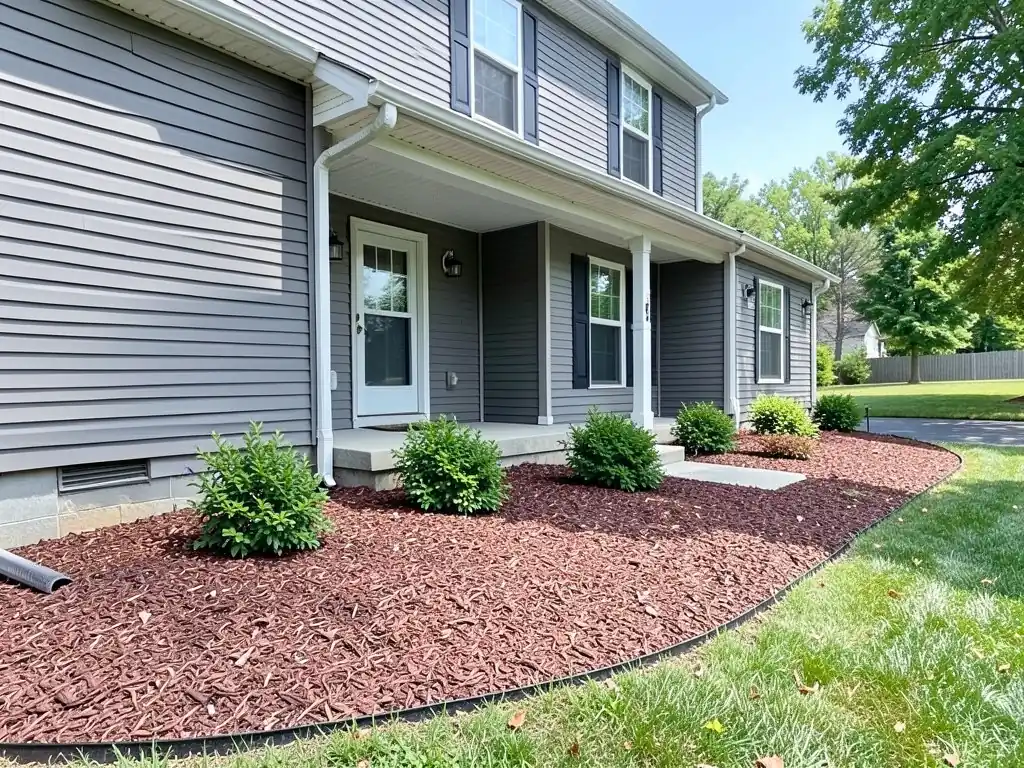
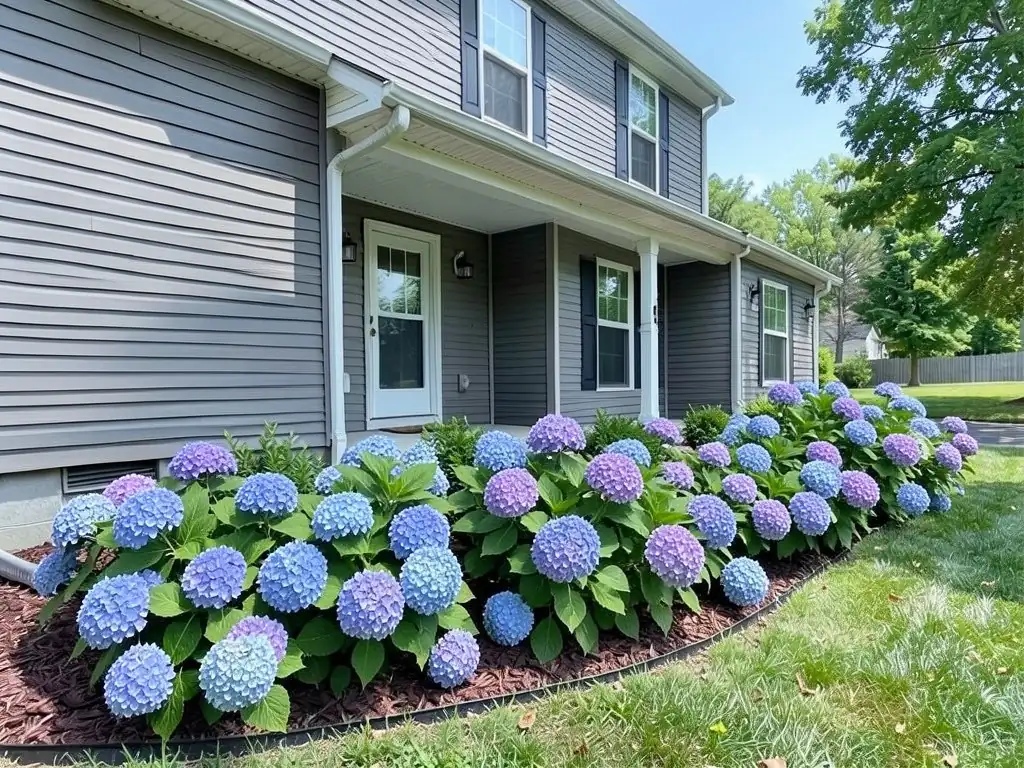
Our first example puts mopheads in the bed in front of a porch.
Sun and soil
Mississippi State Extension says most hydrangeas prefer warm morning sun and cooler afternoon shade, and flower better with about 5 hours of direct sun; deep shade is one cause of poor blooming. Panicle hydrangea is the one it says grows better in full to part sun, while bigleaf and smooth hydrangeas need afternoon shade.
It suggests well-drained soil with organic matter, notes that oakleaf hydrangea is especially sensitive to wet soil, and suggests 2 to 3 inches of mulch after planting. Homes and Gardens adds that hydrangeas are usually not drought tolerant. For a shady corner, see our shade garden ideas page.
Blue, pink or white
Mississippi State Extension says only bigleaf and mountain hydrangeas offer a color choice: soil with a pH of 5 to 5.5 gives blue flowers and 6 to 6.5 gives pink, while white cultivars do not change with pH. Our first example uses blue and purple mopheads; the AI draws whatever color you name, so check what your soil will give.
Rows, hedges and groups of three
Homes and Gardens suggests the rule of three: an odd number of plants in an irregular cluster looks more natural than a straight line or block, and choosing just one plant of a variety is a common mistake. It also suggests lining a winding path with lacecaps and letting them flop onto the path, and framing steps on both sides with the same hydrangea.
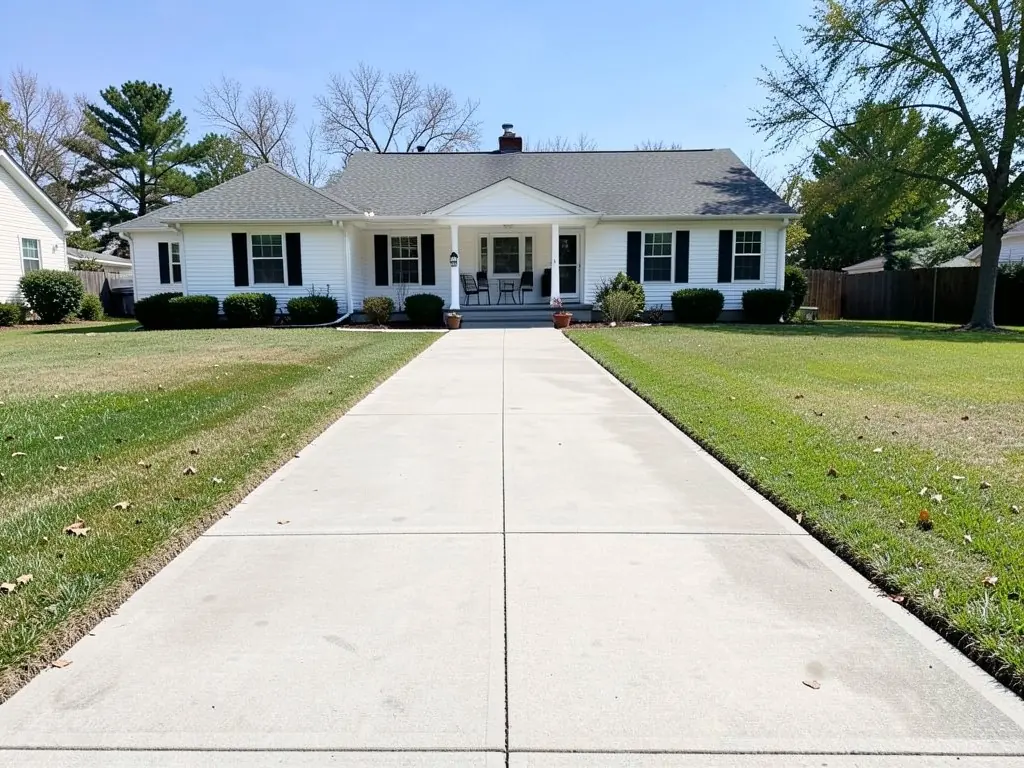
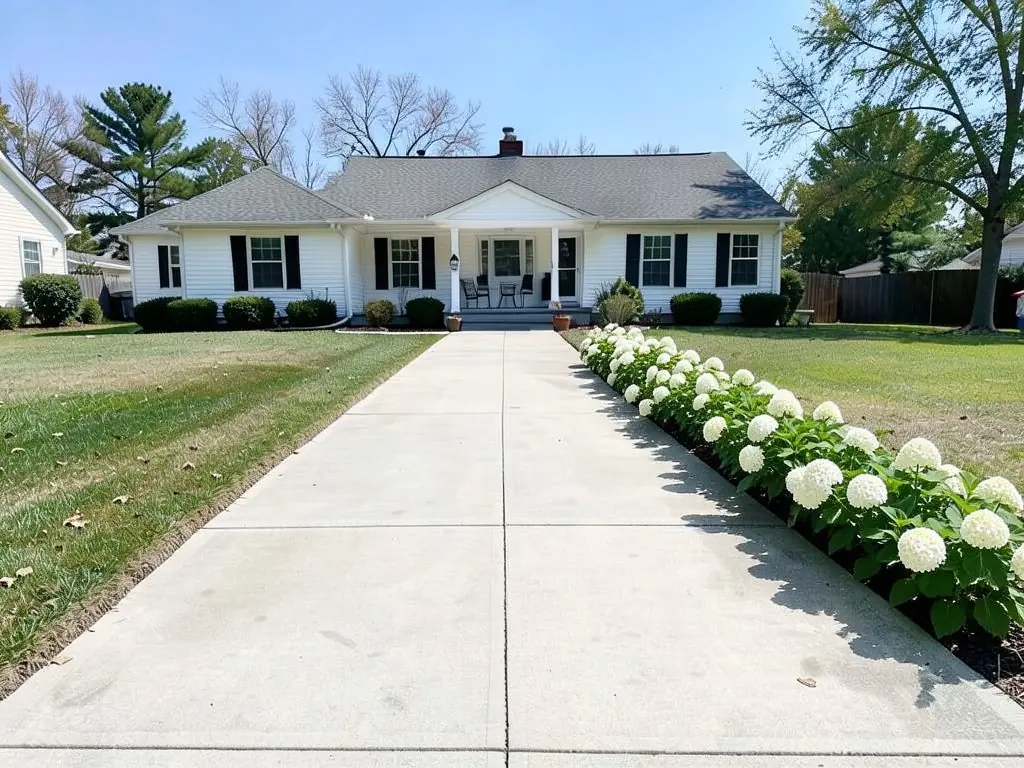
For a long, sunny strip, a row of panicle hydrangeas suits Mississippi State's note that panicles take more sun. Our second example asks for a hedge of white panicle hydrangeas along a driveway. For more on that strip, see our driveway landscaping ideas page.
Hydrangea trees and underplanting
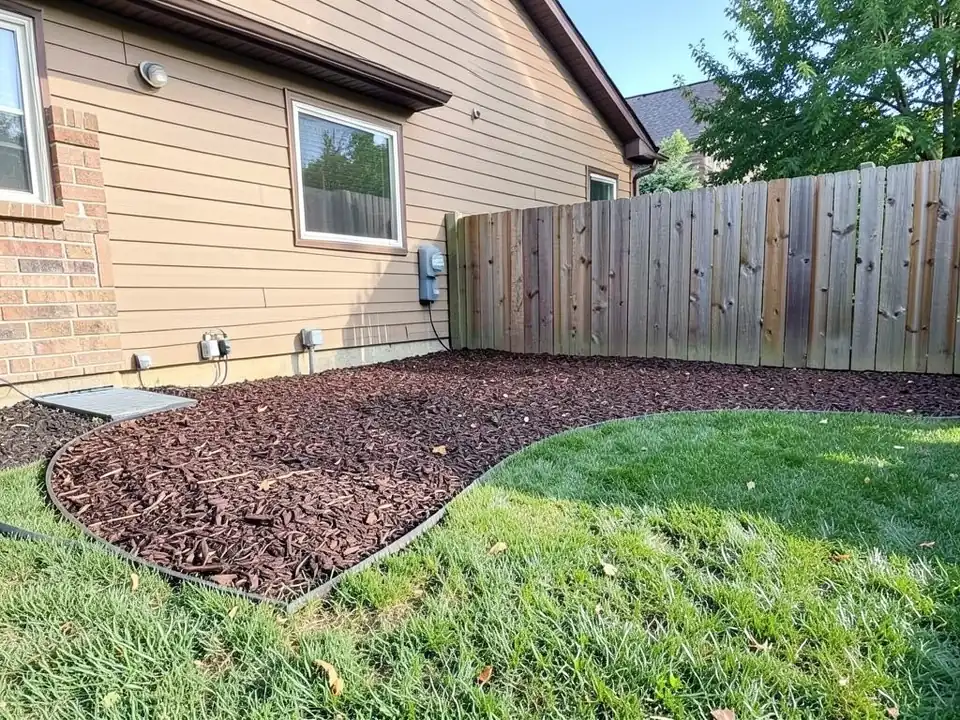
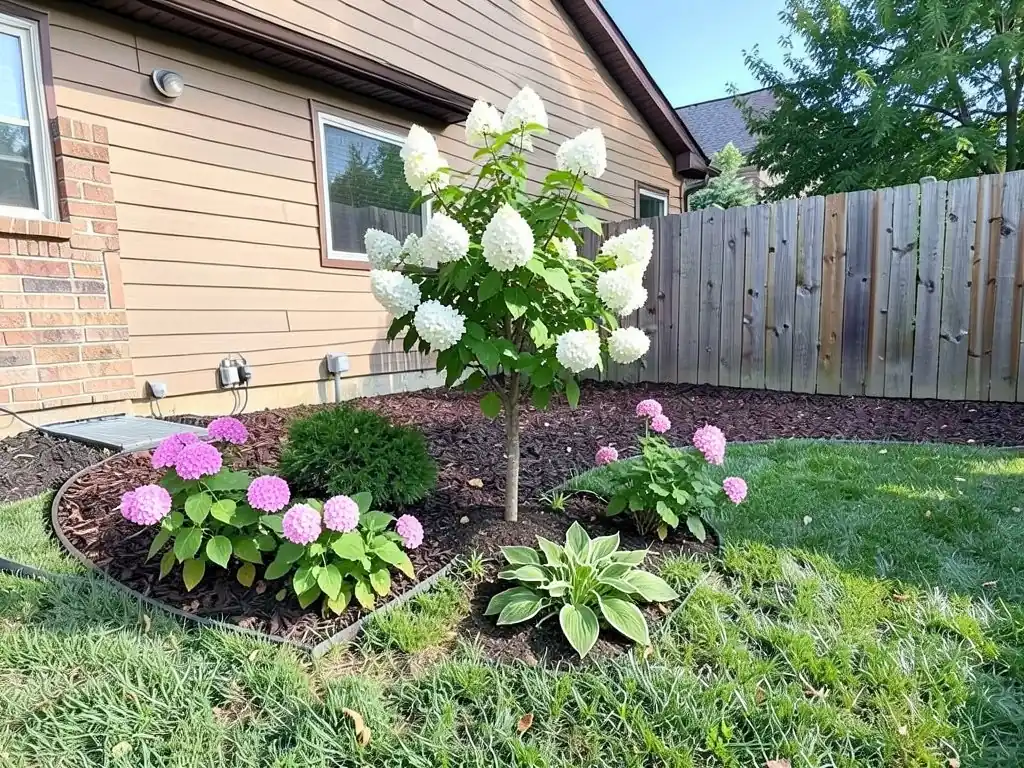
Mississippi State Extension says panicle hydrangea can be grown in tree form. Our third example puts one hydrangea tree in the centre of a bed with pink hydrangeas and a hosta around it.
- Under trees: Homes and Gardens suggests underplanting trees such as acers with Hydrangea arborescens 'Annabelle' in dappled shade.
- Companions: Homes and Gardens names agapanthus, astilbe, penstemons, foxgloves, hostas, ferns and grasses as partners. Dutch Bulbs adds boxwood, heucheras and Hakonechloa, and says to avoid aggressive ground covers and tall shrubs planted too close.
- Style: Dutch Bulbs matches type to style: mopheads for cottage gardens, panicles for modern designs, oakleaf for woodland, and compact types such as 'Little Lime' for small spaces.
Walls, fences and pruning
Homes and Gardens says climbing hydrangeas are a classic way to cover a north-facing wall or fence, with wires or a trellis until they are established, and shows hydrangea blooms tumbling over a white picket fence. Stewarts notes that climbing types can take a couple of years to get going. For more fence planting, see our fence line landscaping ideas page.
Pruning depends on the type. Mississippi State Extension says bigleaf, oakleaf and mountain hydrangeas bloom on old wood and should be pruned shortly after flowering, while smooth and panicle hydrangeas bloom on new wood and can be cut in late winter or early spring. Reblooming bigleaf types flower on both old and new wood. Proven Winners notes that smooth hydrangeas flower even if stems die back, because they bloom on new wood.
How to try a hydrangea idea on your own photo
The tool above is already in Custom mode. The Yard Redesign styles have no text box, so you cannot ask for blue mopheads by the porch or one hydrangea tree in a bed there. Custom lets you name the hydrangea type and color, where it goes and what must stay the same.
- Take the photo in daylight from the lawn or the drive, with the bed, path or strip you want to plant in frame.
- Describe the change in the Custom Design Requirements box: the hydrangea type and flower color, how many and where they go, any companion plants, and what must stay the same, such as the house, the porch, the existing shrubs and the camera angle.
- Use Upload Your Garden Image to add the photo, then click Generate Custom Design. You sign in with an email code or Google when you generate.
- Compare the result with your photo. If it filled the whole bed or covered shrubs you wanted to keep, say exactly how many plants go where and what must stay visible, and try again.
What the AI can and cannot do
The AI shows a look: roughly how a row, a hedge or a hydrangea tree would sit in your own yard. That helps you choose a spot and a layout before you buy plants.
It does not know your sun, soil pH or climate, and it does not know how big a plant will grow. It also does not always follow the instruction: in the examples above it hid the small shrubs it was told to keep, drew round flower heads for a panicle hedge, drew one hosta where we asked for hostas and pushed a bed out into the lawn. Treat the result as a picture of an idea.
Hydrangea instructions to paste into Custom mode
These are the exact instructions we used for the three examples above, in the same order. In the tool above, Custom is already selected: paste one into the Custom Design Requirements box, then upload your photo. Swap in your own hydrangea type, color, positions and what must stay.
- Add ONLY a row of large blue and purple mophead hydrangea shrubs in full bloom along the foundation bed in front of the porch. Keep the house, the porch, the small shrubs, the lawn and the camera angle exactly the same.
- Add ONLY a hedge of white panicle hydrangeas in bloom along the lawn strip beside the driveway, in a mulched bed. Keep the driveway, the house and the camera angle exactly the same.
- Add ONLY one hydrangea tree with a single trunk and big white flower heads in the centre of the bed, with smaller pink hydrangea shrubs and hostas around it. Keep the fence, the lawn, the house and the camera angle exactly the same.
Frequently asked questions
Where should I plant hydrangeas in my yard?
Mississippi State University Extension lists doorways, foundation beds, shrub borders, groupings and single plants. Most types prefer morning sun and afternoon shade, so a spot that gets shade later in the day suits many of them.
How much sun do hydrangeas need?
Mississippi State Extension says hydrangeas flower better with about 5 hours of direct sun but most prefer afternoon shade. Panicle hydrangea grows better in full to part sun, while bigleaf and smooth types need afternoon shade.
How do I get blue or pink hydrangeas?
Mississippi State Extension says only bigleaf and mountain hydrangeas change color: soil pH 5 to 5.5 gives blue and 6 to 6.5 gives pink. White cultivars do not change with pH.
Which hydrangea can be grown as a tree?
Mississippi State Extension says panicle hydrangea can be grown in tree form. Our third example shows one in a bed with smaller hydrangeas and a hosta around it.
What should I plant with hydrangeas?
Homes and Gardens names agapanthus, astilbe, penstemons, foxgloves, hostas, ferns and grasses. Dutch Bulbs adds boxwood, heucheras and Hakonechloa, and says to avoid aggressive ground covers.
When should I prune hydrangeas?
It depends on the type. Mississippi State Extension says bigleaf, oakleaf and mountain hydrangeas bloom on old wood and are pruned shortly after flowering, while smooth and panicle types bloom on new wood and can be cut in late winter or early spring. Reblooming bigleaf types flower on both old and new wood.
Do I need an account, and is it free?
Create a free account with an email code or Google to generate. You get 1 free render, and free renders carry a watermark. If you want more renders without the watermark, choose a paid plan.
More yard ideas
- Shade garden ideas
- Flower bed ideas
- Driveway landscaping ideas
- Front yard landscaping ideas
- Cottage garden ideas
- Fence line landscaping ideas
- Rose garden ideas
Want to see any of these on your own yard? Open our AI yard design tool, upload a photo and describe the change, or browse all AI design tools.